Choosing your wedding dress fabric is just as important as picking the silhouette of your gown. The texture, weight, and movement of the material can transform the entire look and feel of your dress. At Pronovias, we guide brides through the world of bridal gown fabrics, helping them discover the material that feels most timeless, elegant, and true to their personal style.
There isn’t one single “best fabric for a wedding dress”—the right choice depends on your aesthetic preferences, your gown’s silhouette, and even the season of your wedding. In this guide, we’ll explore the most common wedding dress fabrics, highlighting their unique qualities, which wedding dress shapes they suit best, and how they bring different bridal looks to life.
Before we dive deeper, here’s a quick guide to some popular fabrics used for wedding gowns:
Lace – romantic, timeless, and often layered for detail
Satin and silk – smooth, lustrous, and perfect for structured gowns
Tulle and organza – light, airy, and voluminous for dramatic skirts
Chiffon and crepe – fluid, soft, and ideal for flowing silhouettes
Mikado and taffeta – sculptural, luxurious, and bold in shape
Cotton and linen – breathable, simple, and elegant for warm-weather weddings
Jacquard and mesh – textured, unique, and fashion-forward
Lace: the epitome of romance
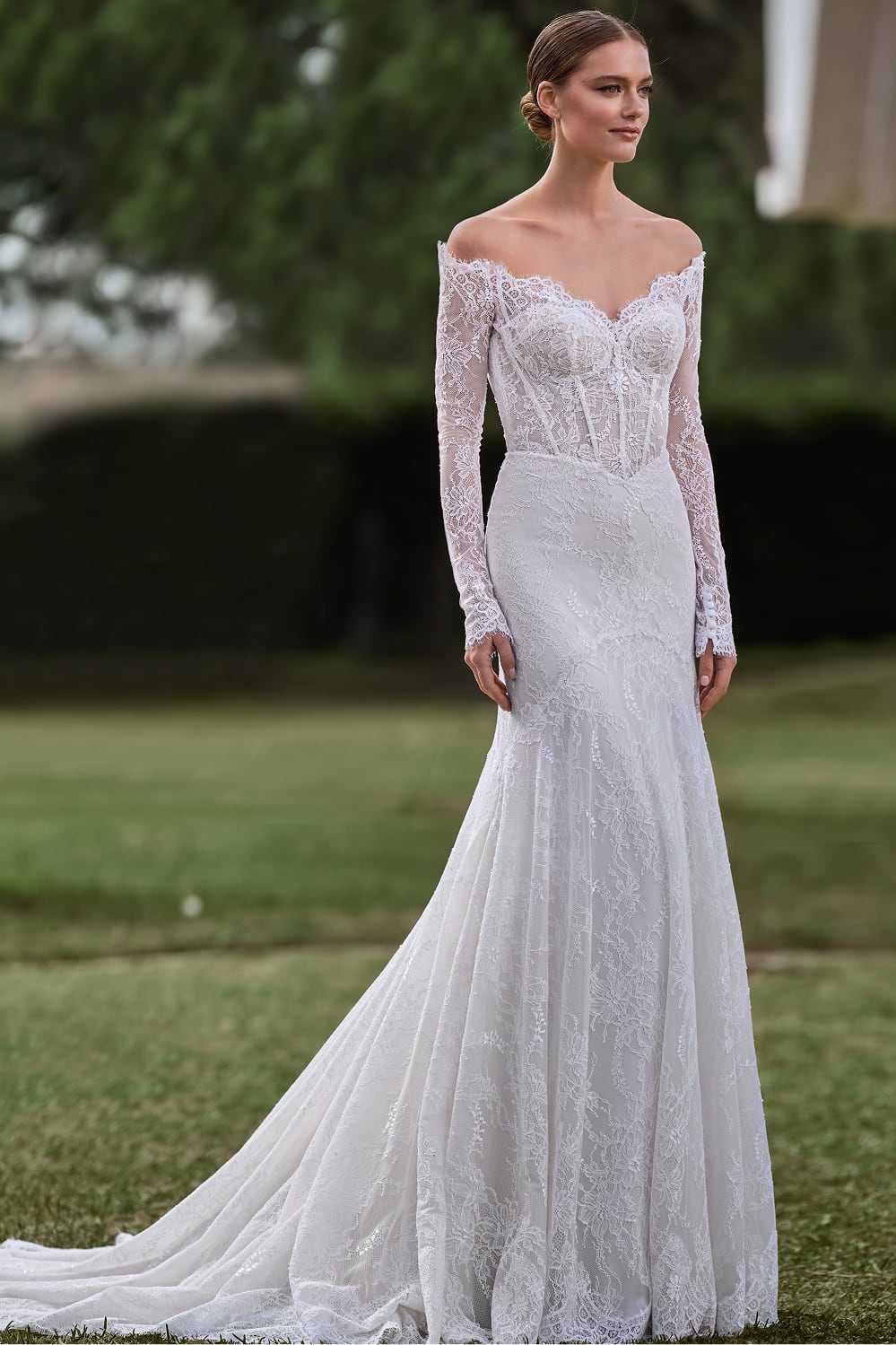
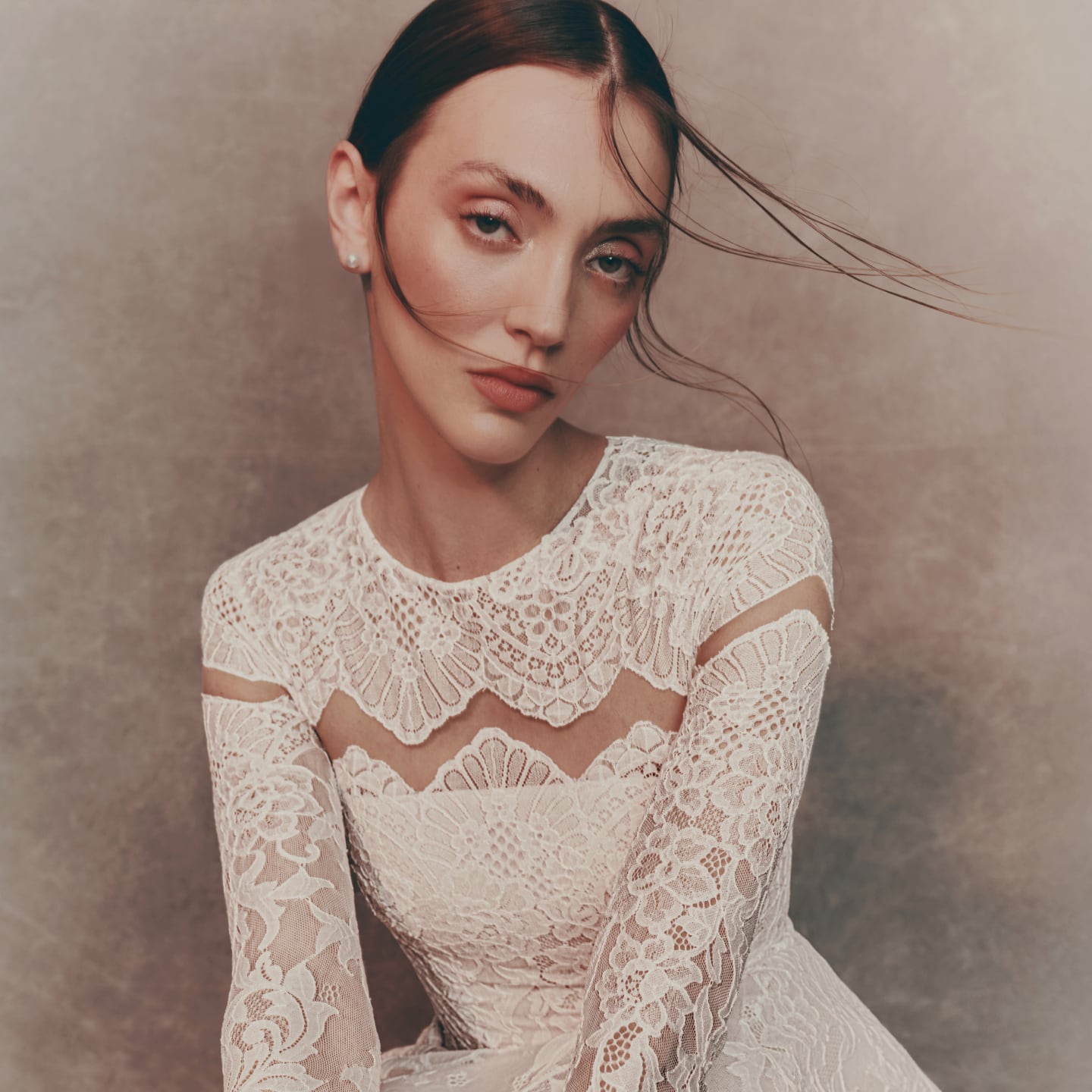
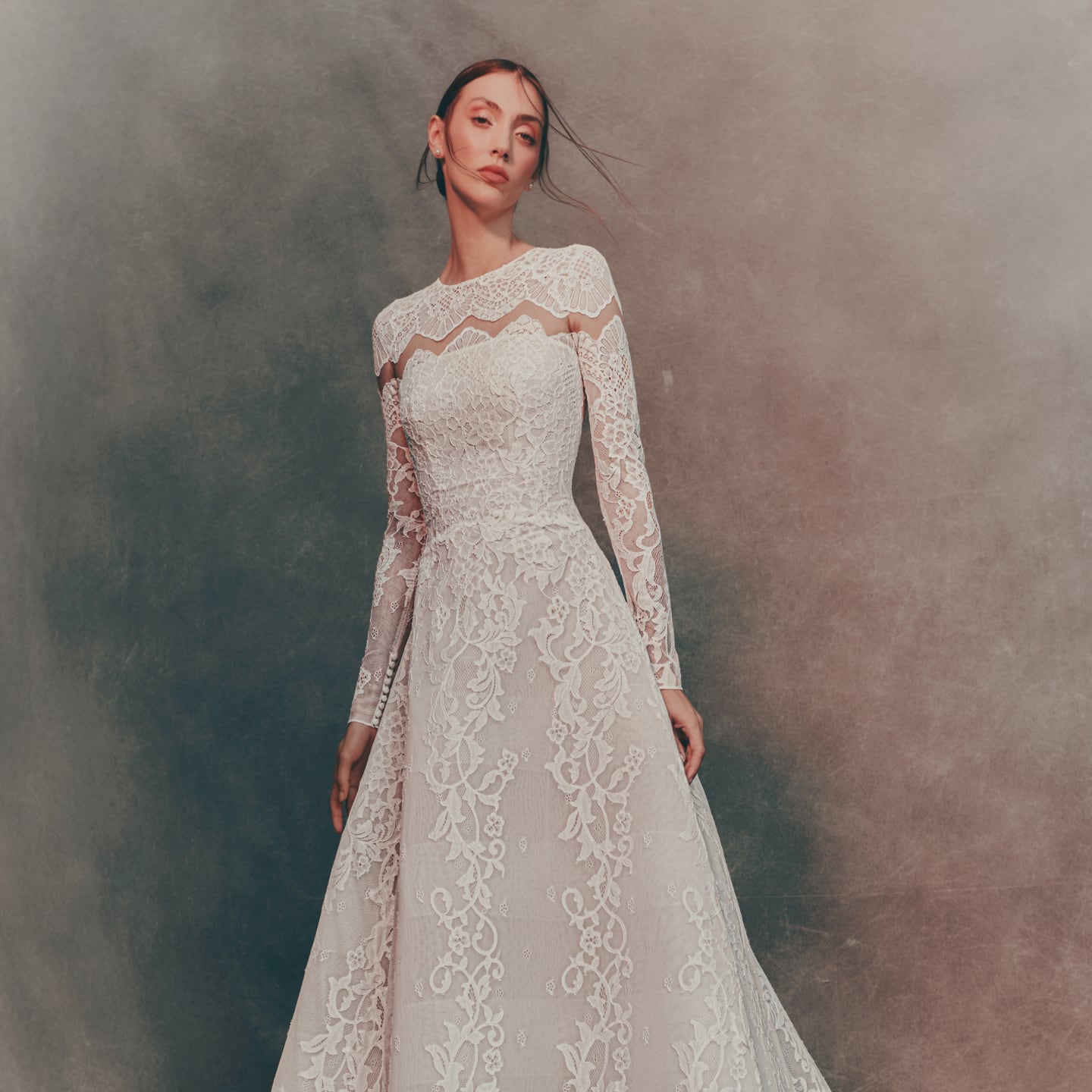
Lace has long been a hallmark of the elegance of bridal dress fabric. Its intricate patterns add depth and femininity to any design, whether used across the entire gown or as delicate appliqués. Brides drawn to vintage-inspired details often fall in love with lace wedding dresses, which embody romance and tradition in equal measure. Lace also doubles up as a beautiful material for your wedding veil, creating a cohesive, dreamy bridal aesthetic.
Satin and silk: ultimate luxury
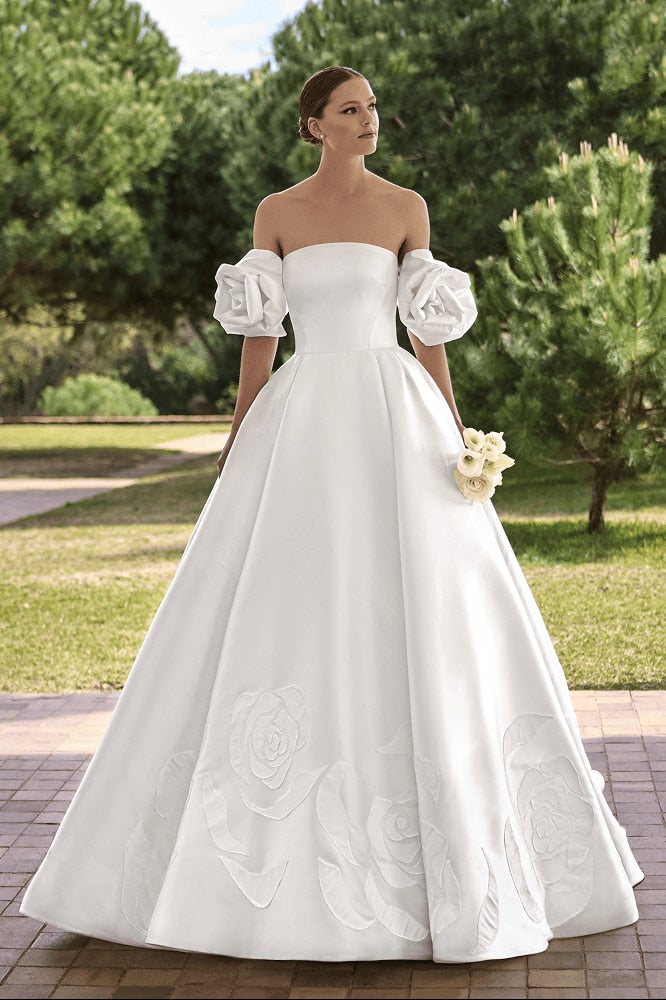
Few materials rival the sophistication of satin and silk. With their natural sheen and smooth finish, these bridal gown fabrics create a polished and timeless look.
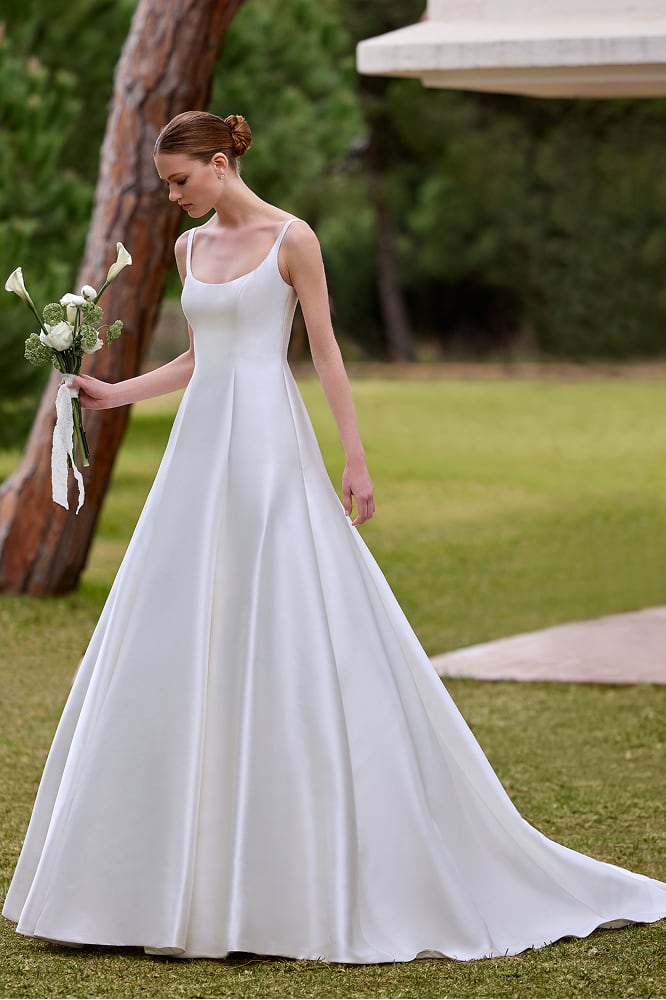
The difference between silk and satin is that silk is a natural fiber made from silkworms, while satin is actually a weave that can be made from silk or other fibers. Satin is ideal for structured silhouettes, while silk is lightweight and breathable, making it versatile for year-round weddings.
When combined, “silk satin” creates one of the most luxurious bridal fabric types, offering the softness of silk with the luminous sheen of satin. Brides seeking a dramatic, regal effect often choose these materials for their richness and elegance.
Tulle and organza: airy and ethereal
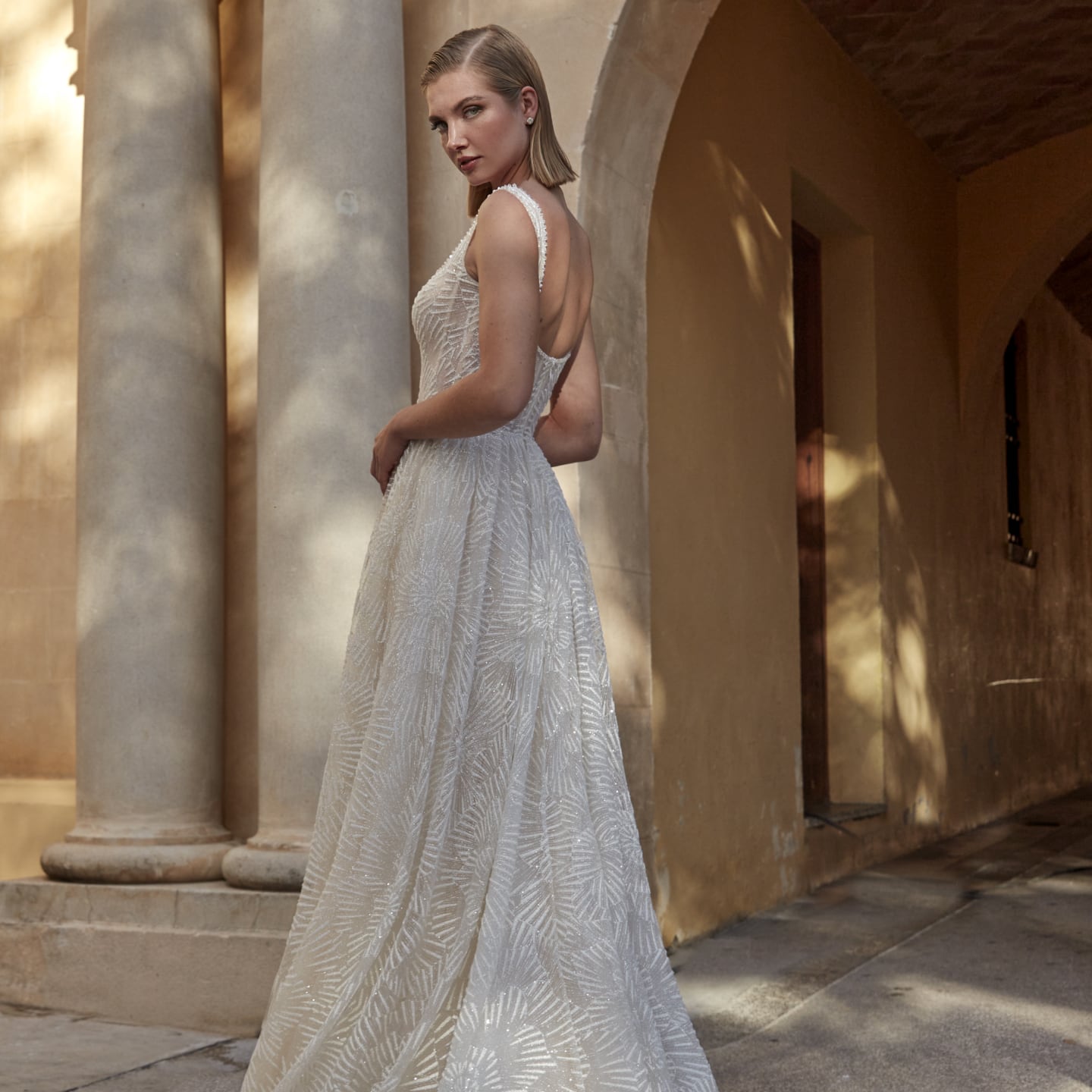
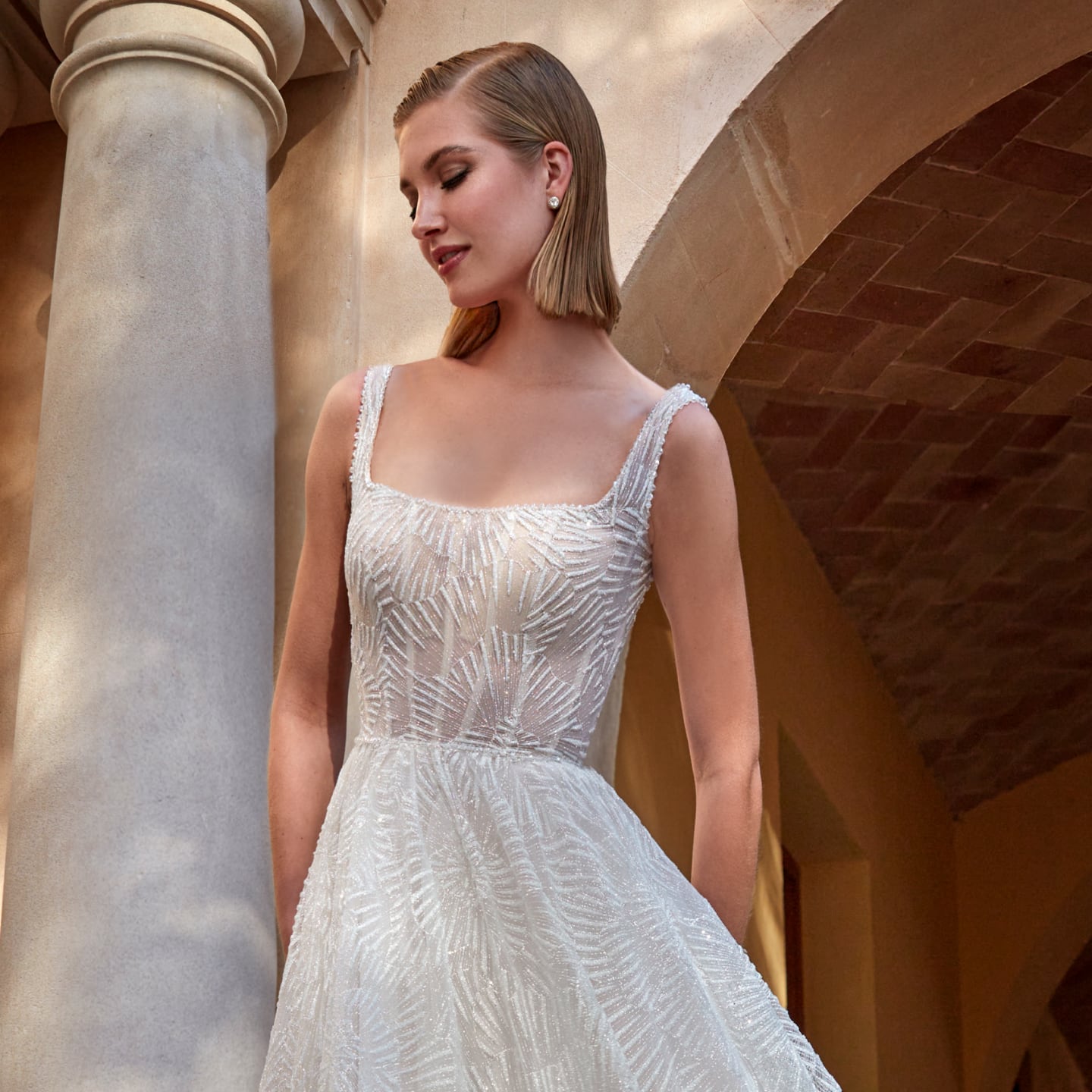
Tulle and organza are both light and whimsical, making them popular for voluminous skirts and delicate overlays. A tulle wedding gown exudes fairytale charm, while organza adds just a touch more structure, holding its shape with elegance. Both bridal dress fabrics share an airy quality that feels romantic and weightless, yet they differ in finish: tulle is softer and more flexible, creating a dreamy, ethereal effect, while organza has more body, lending gowns a crisp, refined look.
Brides who envision a ball gown or princess-inspired silhouette often choose these fabrics for their dramatic movement, while those seeking a romantic, whimsical aesthetic love them for their ability to create layers of volume without heaviness.
Chiffon and crepe: soft and flowing
Chiffon and crepe are beloved wedding dress fabrics known for their graceful drape and light movement, making them favorites for gowns that feel effortless and romantic. Chiffon wedding dresses are especially popular for outdoor or destination weddings, thanks to the fabric’s sheer, breezy quality. Crepe, by contrast, has a slightly heavier weight and subtle texture, allowing it to skim the body with elegance while still offering gentle structure.
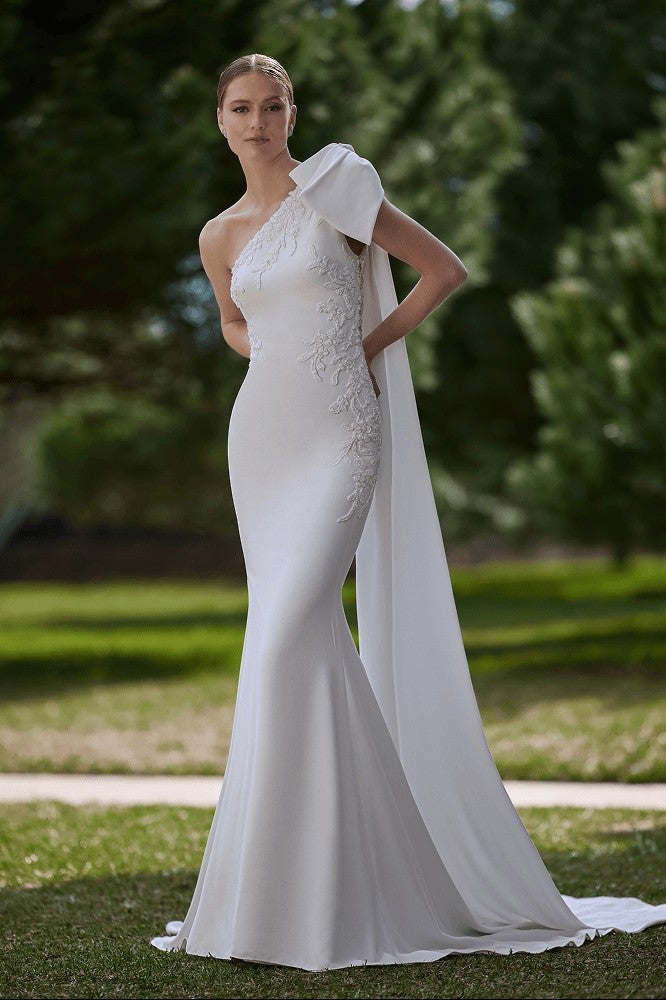
Brides often choose chiffon for ethereal, layered gowns that float with every step, while crepe is ideal for sleek, modern silhouettes that highlight clean lines and understated sophistication.
Mikado and taffeta: bold and sculptural
Mikado and taffeta are structured bridal fabric types that lend gowns a striking, statement-making quality. Mikado, often a silk blend, is smooth, dense, and refined, perfect for dramatic ball gowns or sleek, architectural designs. Taffeta, meanwhile, is lighter and crisper, with a subtle sheen that enhances volume and shape. Brides who want a bold, structural silhouette often turn to these fabrics for their ability to hold form while exuding timeless luxury.
Cotton and linen: effortless and breathable
While less traditional in luxury bridalwear, cotton and linen bring a fresh, understated elegance to the mix. They both offer natural breathability, making them excellent choices for warm-weather weddings. Cotton feels soft and smooth against the skin, while linen has a slightly textured, organic finish that lends itself beautifully to rustic or minimalist bridal looks. Brides who dream of a relaxed outdoor celebration, whether in a garden or on the beach, often choose these lighter wedding dress fabrics to ensure comfort and understated elegance on their big day.
Jacquard and mesh: textured and modern
Jacquard and mesh are unique types of material for wedding dresses that bring dimension to contemporary bridal fashion. Jacquard is woven with intricate patterns, creating a luxurious, textured surface that feels regal and fashion-forward. Mesh, by contrast, is sheer and versatile, serving as a base for embroidery, appliqué, or layered detailing. These bridal fabric types are ideal for modern those seeking something truly avant-garde, blending texture with elegance.
Choosing the best fabric for your season
The season of your wedding plays an important role in selecting the right wedding dress materials and fabrics. The best material for a summer wedding dress differs immensely from what you’d want in a winter gown. Here’s a quick guide to fabrics by season:
Spring: Lace and chiffon are perfect for airy, romantic gowns.
Summer: Lightweight fabrics like cotton, chiffon, or silk ensure comfort in warm weather.
Fall: Crepe and satin offer elegance with enough structure for cooler evenings.
Winter: Mikado, taffeta, and velvet-inspired jacquard provide warmth and grandeur.
By considering both material and season, you can select the option that ensures comfort and confidence on your big day.
Your wedding gown fabric is the foundation of your bridal look, shaping not only the silhouette but also the mood and style of your day. Whether you’re drawn to the romance of lace, the glamour of satin, or the breezy elegance of chiffon, each fabric tells a unique story. Discover our full selection of luxury wedding dresses and let us help you find the gown that feels perfect for you.